Total Knee Arthroplasty (Replacement)
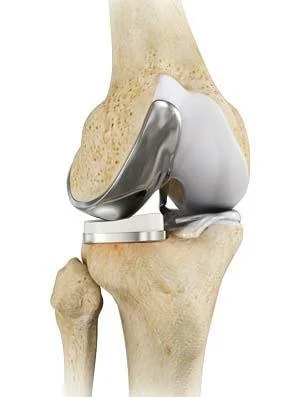
Anatomy
The knee functions as a hinge joint that allows bending and straightening of the leg. It consists of three bones: the femur (thigh bone), tibia (shin bone), and patella (kneecap).
The ends of these bones are covered with smooth articular cartilage, which reduces friction and helps absorb shock during movement. Between the femur and tibia are two structures called the medial and lateral menisci, which act as cushions and help distribute weight evenly across the joint.
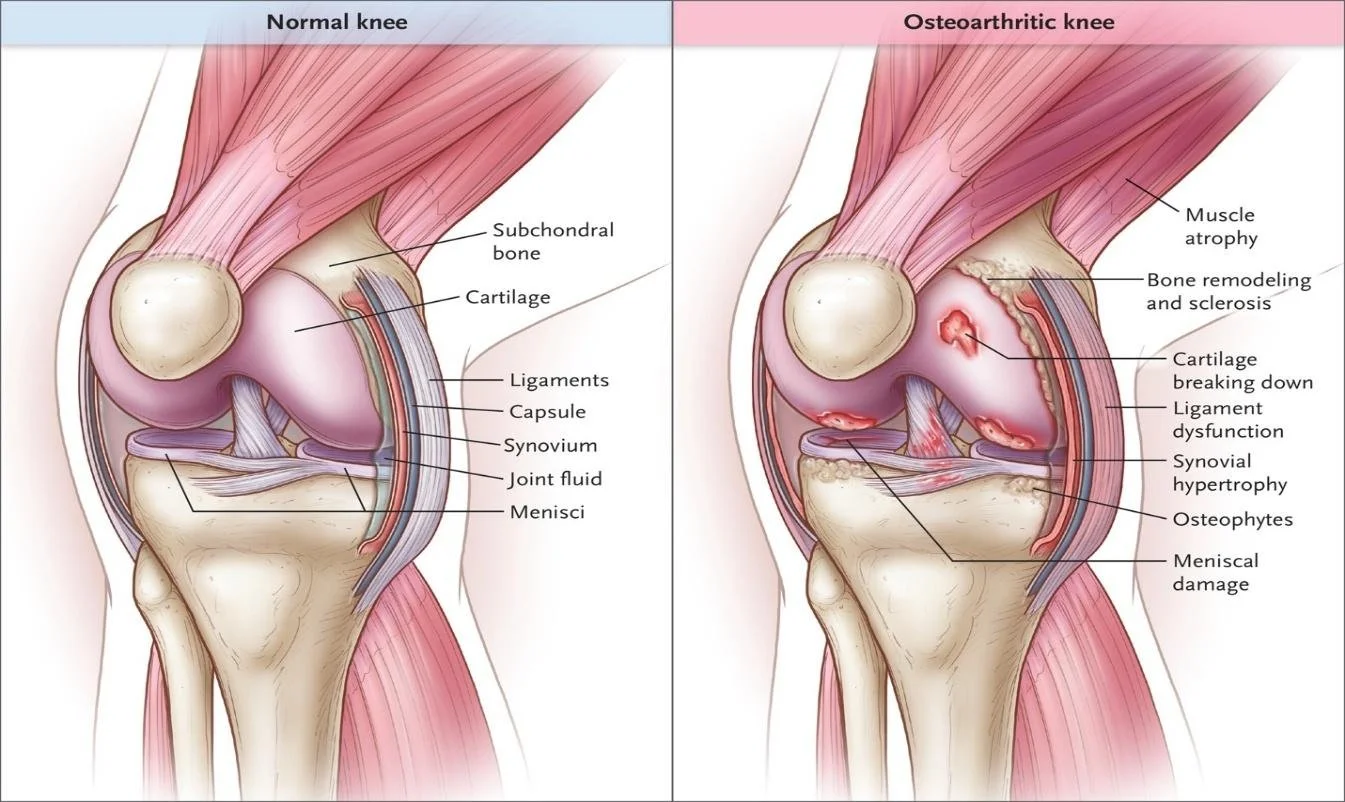
Stability of the knee is maintained by several important ligaments and surrounding muscles. The anterior cruciate ligament (ACL) and posterior cruciate ligament (PCL) control forward and backward movement of the tibia, while the medial collateral ligament (MCL) and lateral collateral ligament (LCL) stabilize the knee from side-to-side forces.
Muscles such as the quadriceps in the front of the thigh and the hamstrings in the back work together to move and support the joint. Tendons connect these muscles to the bones, allowing the knee to perform essential activities such as walking, running, jumping, and changing direction.
Treatment Options
Non-Operative Options
Currently, no cure for osteoarthritis exists. Surgical procedures such as a total knee arthroplasty or, in some cases, a partial knee arthroplasty resurface degenerative joint surfaces and cartilage within the joint. There are, however, non-operative treatment options for symptoms of osteoarthritis:
Corticosteroid injections provide temporary pain relief by reducing inflammation and improving the body’s ability to manage the inflammation in the joint.
A corticosteroid injection should be trialed prior to discussing knee replacement surgery and can last for extended periods of time. However, they have diminishing effects with each new injection.
Visco supplementation injections aim to relieve pain by lubricating the joint with a gel-like fluid. This fluid allows the articulating surfaces of the joint to move more smoothly causing less inflammation.
Physical therapy is recommended to increase your range of motion and coordination of muscles to better support the knee. Priming these areas prior to surgery has been shown to improve outcomes, and some insurances require it before authorizing a knee arthroplasty.
NSAID/anti-inflammatory medications such as Meloxicam or Relafen can provide pain relief and decrease inflammation around the knee.
Medial/lateral unloader braces offload areas of osteoarthritis and prevent inwards collapse of the knee by applying pressure and aligning the knee into a neutral position.
Radiofrequency ablations (RFA) use radiofrequencies to disrupt sensory nerve function that prevents the nerve from transmitting pain signals. These are temporary – the nerve will regain function, and the RFA can be repeated.
Genicular artery embolization is a minimally invasive procedure that reduces inflammation by blocking excess blood flow to over-vascularized areas of a joint.
What is a Total Knee Arthroplasty (TKA)?
A total knee arthroplasty (TKA) or knee replacement is the relining or resurfacing of the joint with artificial components called prostheses:
Knee replacements have been performed in the United States since the early 1970s.
The procedure has evolved over the last 50+ years into a reliable procedure. It remains a major surgical procedure that can have side effects and complications.
Robotic assistance for total knee arthroplasty is commonly used for precise individualized treatments.
Recent data (from AAOS 2023) suggest that over 90 percent of patients who underwent a TKA were pleased and functional 15 years post-surgery. Most studies suggest a 20+ year lifespan of a new knee.
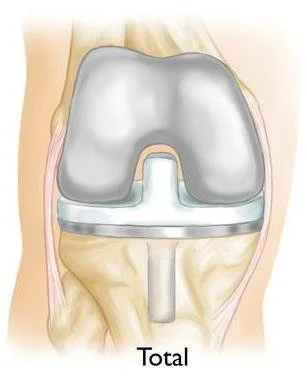
Partial versus Total Knee Arthroplasty
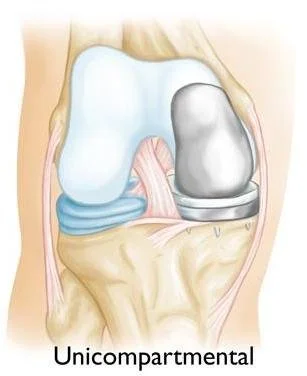
Partial knee arthroplasty can be considered by patients who have predominant osteoarthritis in the inner part of the knee:
Partial knee arthroplasties are a less invasive option when compared to a total knee arthroplasty and can have a faster recovery.
Partial knee arthroplasties are more likely to need further surgery, often being converted into a total knee replacement due to osteoarthritis worsening in the originally untreated areas.
Dr. Tingstad specializes in total knee replacements and will help you select the best treatment based on your injury.