Shoulder Stabilization
Anatomy
The shoulder is a ball-and-socket joint, meaning a rounded head fits into a cupped depression, allowing for a wide range of motion.
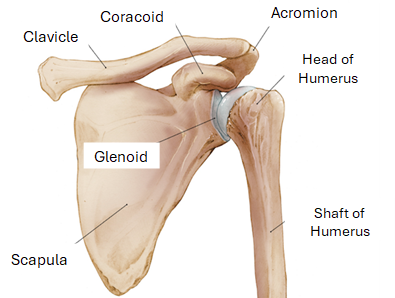
The shoulder is primarily made up of three main bones:
The Humerus: is the upper portion of the arm and is rounded at the top. The top end is rounded and forms the ball of the ball-and-socket joint.
The Scapula: or the shoulder blade, is the large, flat, triangular bone on the back of the shoulder/chest. The part of the scapula that forms the socket is called the glenoid.
The Glenoid: This is the “socket” part. It is relatively shallow, which allows for a lot of movement but also makes the joint less stable compared to the hip.
The Clavicle: also known as the collarbone, is the bone that connects the sternum (breastbone) to the shoulder blade, providing structural support.
Supporting Structures
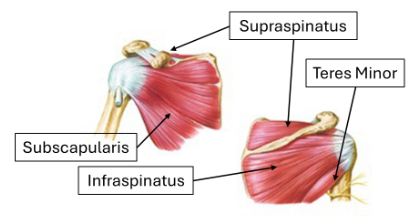
The Rotator Cuff: is a group of four muscles and their tendons that surround the joint. They act like a dynamic sling, holding the ball of the humerus centered in the shallow glenoid socket. This allows you to rotate and lift your arm.
Cartilage: a smooth, gliding tissue that covers the ends of the bones (the head of the humerus and the glenoid). This allows the bones to glide against each other easily and without pain. When this cartilage wears out, you get arthritis, which is often what leads to a total shoulder replacement.
What is Shoulder Instability?
Shoulder instability occurs when the structures that normally keep the shoulder joint in place become stretched, torn, or unable to provide enough support.
Several important structures work together to stabilize the shoulder. A ring of cartilage called the labrum surrounds the socket and helps deepen it, creating a better fit for the ball of the humerus. Strong bands of tissue known as ligaments connect the bones and limit excessive movement, while the muscles and tendons of the rotator cuff actively keep the shoulder centered during everyday activities and sports. Injury to any of these structures can lead to feelings of instability. Patients may describe this as the shoulder feeling like it is "slipping out," "giving way," or as though it may dislocate during certain movements.
Shoulder instability can develop suddenly after a traumatic injury, such as a fall or sports-related collision, or it may occur gradually over time due to repetitive strain. Symptoms can include pain, weakness, a sense of looseness, recurrent dislocations, or apprehension when placing the arm in certain positions.
Treatment Options
Non-Operative Treatments
Activity Modification: Avoiding positions or activities that provoke symptoms, particularly repetitive overhead movements or contact sports during the recovery period.
Physical Therapy: A structured rehabilitation program focuses on strengthening the rotator cuff and shoulder blade (scapular) muscles to improve dynamic stability and control of the joint.
Anti-Inflammatory Medications: Over-the-counter medications such as NSAIDs may help reduce pain and inflammation associated with instability episodes.
Bracing: In select patients, shoulder braces may provide additional support and help limit movements that increase the risk of recurrent instability.
Surgical Options
Fixing Torn Tissue
Keyhole Bankart Repair: The most common surgery for a dislocating shoulder. Using small incisions and a camera, the surgeon reattaches the torn tissue (labrum) that normally acts as a "bumper" keeping your ball in the socket.
Open Bankart Repair: The same repair as above, but through a slightly larger incision.
Capsular Tightening: The ligaments and capsule surrounding your shoulder joint can become stretched and loose over time, especially if you've had many dislocations. This procedure shrinks and tightens that tissue like taking in a loose seam on a jacket.
Fixing Bone Loss
Latarjet Procedure: In this procedure, a small piece of bone from the front of your shoulder is moved across to rebuild the socket rim and create a natural "blocking" effect. It's a very reliable option for people with significant bone loss or those who've had a previous repair fail.
Bone Grafting (Eden-Hybinette): Similar in aim to the Latarjet, but uses bone taken from your hip or from a donor to rebuild the worn-away socket.
Remplissage: If the ball of your shoulder has a dent in it (caused by a dislocation), this dent can "catch" on the socket edge and cause re-dislocation. This procedure fills the dent with soft tissue to stop it catching and is usually done alongside a Bankart repair.
Dr. Tingstad specializes in shoulder stabilization and will work with you to find the best treatment option for your shoulder.