Meniscus Tears
Anatomy
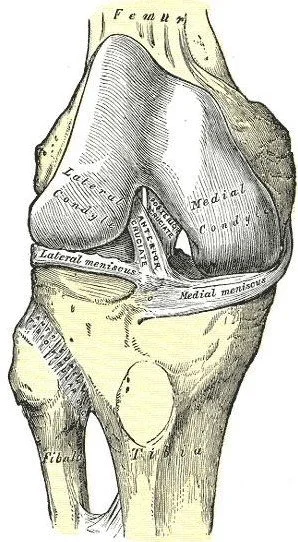
The knee functions as a hinge joint that allows bending and straightening of the leg. It consists of three bones: the femur (thigh bone), tibia (shin bone), and patella (kneecap).
The ends of these bones are covered with smooth articular cartilage, which reduces friction and helps absorb shock during movement. Between the femur and tibia are two structures called the medial and lateral menisci, which act as cushions and help distribute weight evenly across the joint.
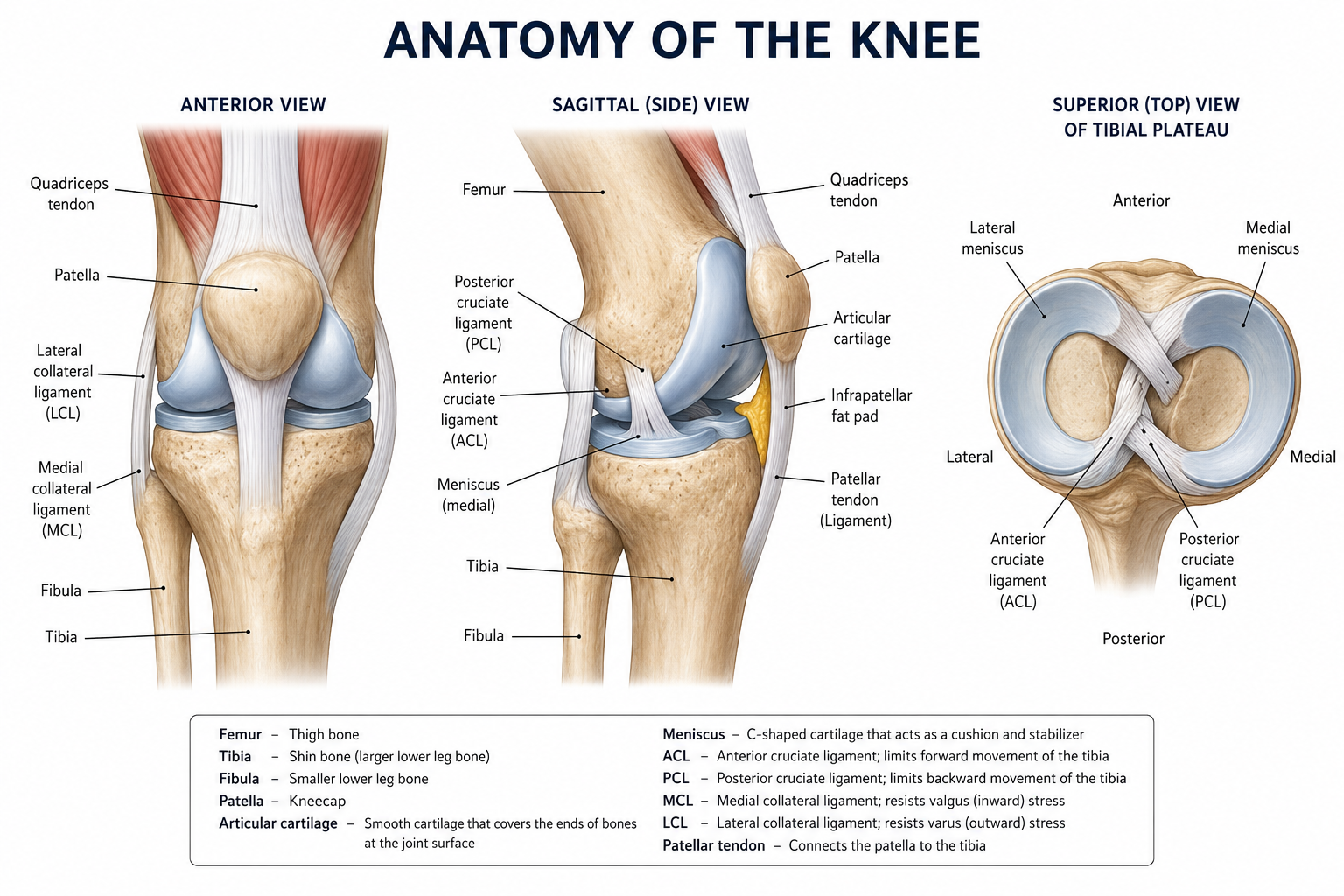
Stability of the knee is maintained by several important ligaments and surrounding muscles. The anterior cruciate ligament (ACL) and posterior cruciate ligament (PCL) control forward and backward movement of the tibia, while the medial collateral ligament (MCL) and lateral collateral ligament (LCL) stabilize the knee from side-to-side forces.
Muscles such as the quadriceps in the front of the thigh and the hamstrings in the back work together to move and support the joint. Tendons connect these muscles to the bones, allowing the knee to perform essential activities such as walking, running, jumping, and changing direction.
Meniscus Tear
Tears either occur through acute injury or gradual degeneration. Acute tears typically occur during sports or physical activity when the knee is twisted while the foot is planted. Degenerative tears, more common in people over 40, develop slowly as the cartilage weakens and thins over time, and can happen from minor movements.
A meniscus tear typically causes a sharp pain along the joint line of the knee, often felt at the moment of injury, especially if it occurs during a twisting or pivoting motion. Many people describe hearing or feeling a distinct pop when the tear happens, followed by swelling.
The knee may feel stiff, achy, and difficult to fully straighten or bend, and there's often a noticeable catching or locking sensation. Some people also experience a feeling of knee instability when twisting, squatting, or climbing stairs. Pain often worsens with these activities.
Treatment Options
Non-Operative Treatment
Rest, Bracing & Anti-Inflammatories: Taking load off the knee gives the joint a chance to heal naturally. A brace or compression sleeve can add stability day-to-day. NSAIDs like ibuprofen help with pain and swelling.
Physical Therapy: The focus of PT is to strengthen the muscles around the knee so they absorb the stress that the damaged cartilage can't. Physical therapy programs also address movement patterns and range of motion.
Injections: Corticosteroid injections can provide meaningful pain relief by reducing inflammation and improving the body’s ability to manage the inflammation in the joint.
Surgical Options
Partial Meniscectomy: A meniscectomy involves trimming away the damaged portion of the meniscus rather than attempting to repair it. It's typically recommended for tears in the inner zone of the cartilage, where there's no blood supply and natural healing will not occur.
Meniscal Repair: This option is used when the tear sits in the outer, blood-supplied portion of the meniscus and the tissue quality is good enough to heal. Using an arthroscope, the surgeon sutures the torn edges back together.
Dr. Tingstad specializes in meniscus injuries and will help you select the best treatment based on your injury.